
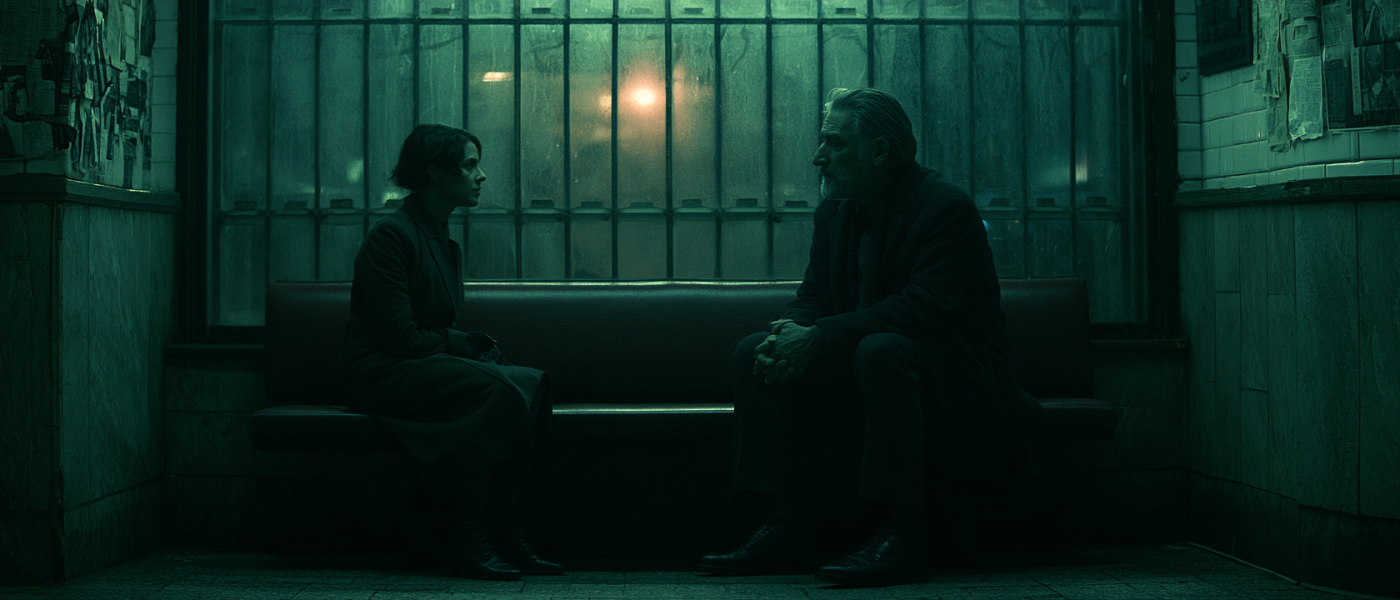
In prose, dialogue can meander. Characters can talk the way real people talk — with tangents, repetitions, verbal tics, circling around points before making them.
In screenwriting, every word costs money.
The economics of dialogue
Screen time is finite. A two-hour film is about 120 pages. Every scene competes with every other scene for space.
This means dialogue must be ruthlessly efficient. Not clipped or unnatural — but purposeful. Every line should do work. Advance plot. Reveal character. Create conflict. Ideally, all three at the same time.
Long speeches are expensive. They eat page space and screen time. They also tend to be boring — in film, we want to see, not hear.
What dialogue does differently on screen
In a novel, dialogue carries information comfortably. Characters can explain things, share backstory, discuss ideas. The reader absorbs it alongside description and interiority.
On screen, exposition in dialogue sticks out. “As you know, Bob” — characters telling each other things they already know for the audience's benefit — is a cardinal sin. Audiences feel the artificiality immediately.
Screen dialogue needs to feel like people talking, not like the writer communicating to viewers.
Subtext is everything
The best screen dialogue is rarely on-the-nose. Characters talk about one thing while meaning another. The real conversation happens underneath.
Think of the famous “I drink your milkshake” scene in There Will Be Blood. Daniel Plainview isn't really discussing drainage — he's humiliating a broken man. The surface words and the emotional reality diverge.
This is where actors live. You give them the words; they give them meaning. Write dialogue that leaves room for interpretation, for subtext, for the actor to bring something.
Less than you think
Whatever amount of dialogue you think you need, it's always less.
Can the line be cut entirely? Often.
Can the information be conveyed visually instead? Usually better.
Can three lines become one? Almost always.
New screenwriters overwrite dialogue. They're used to prose, where words are the whole experience. In film, dialogue is one instrument in an orchestra. It doesn't need to carry everything.
How real people don't talk
Screenplay dialogue shouldn't be realistic. Real speech is full of filler, fragmentation, and interruption.
Good screen dialogue is stylised to feel natural. It has rhythm and purpose but sounds like it could be said. It's compressed reality — faster, sharper, more meaningful than actual conversation.
Listen to Tarantino characters. They don't talk like real people. They talk like heightened, entertaining versions of people. That's the trick.
The ultimate test
Read your dialogue aloud. Does it sound speakable? Does it have rhythm? Would an actor enjoy saying these words?
Then cut a third of it. See if the scene still works.
It probably does.